q

ETERNA Automatic Die Cutters

Atb consultech / About the bos agente oficial maquinas Eterna

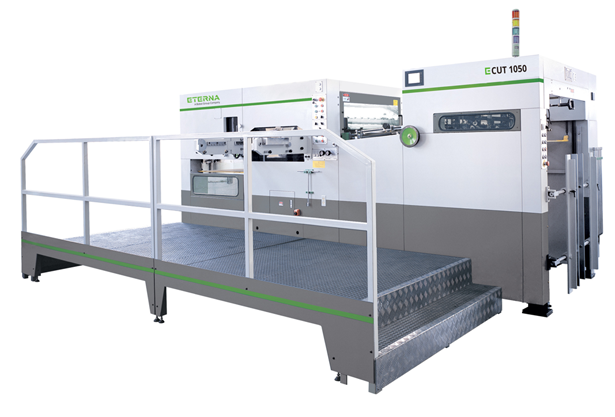
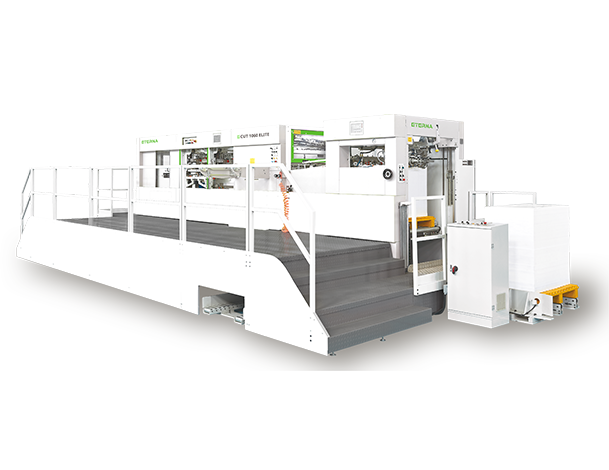
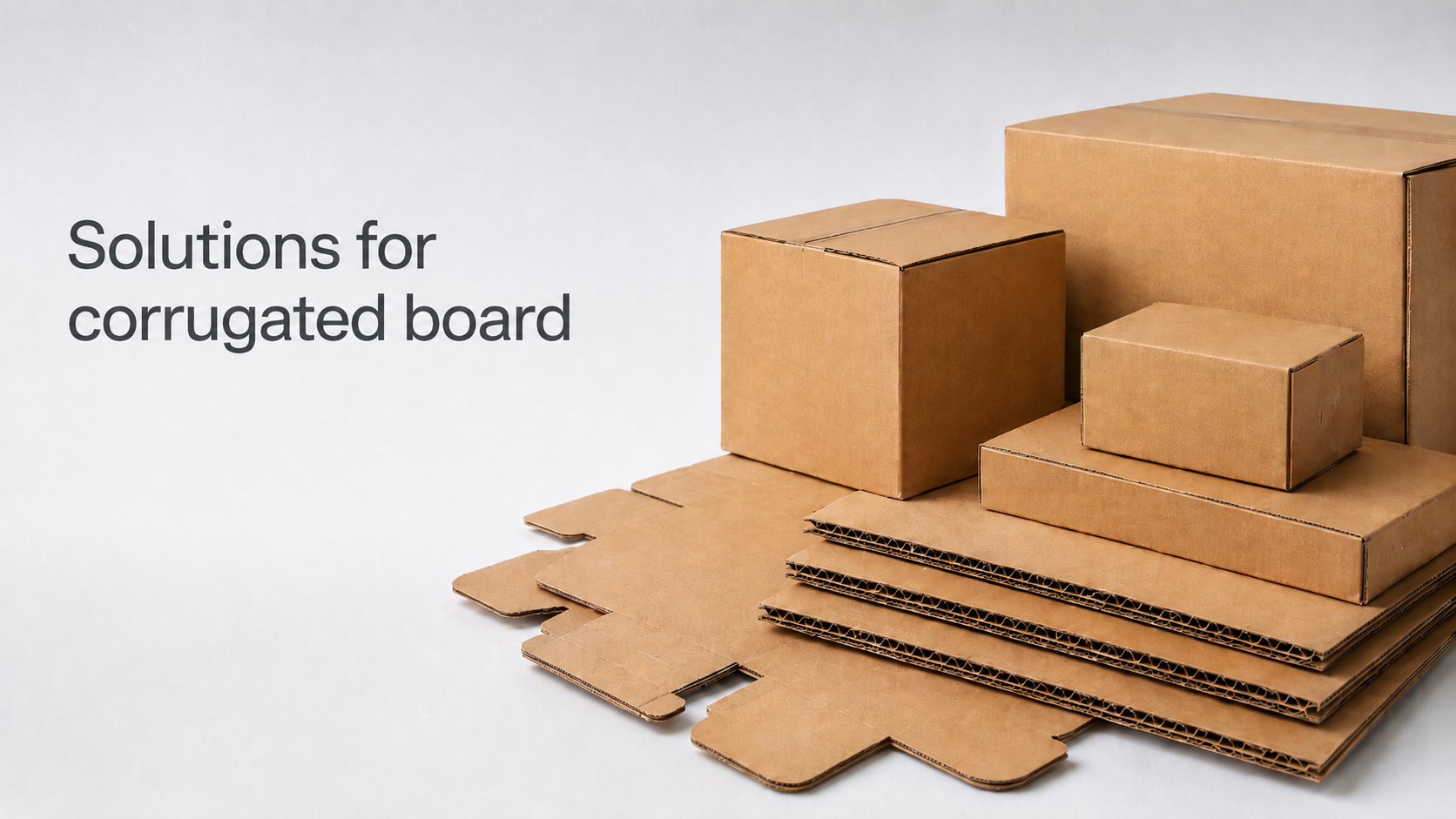
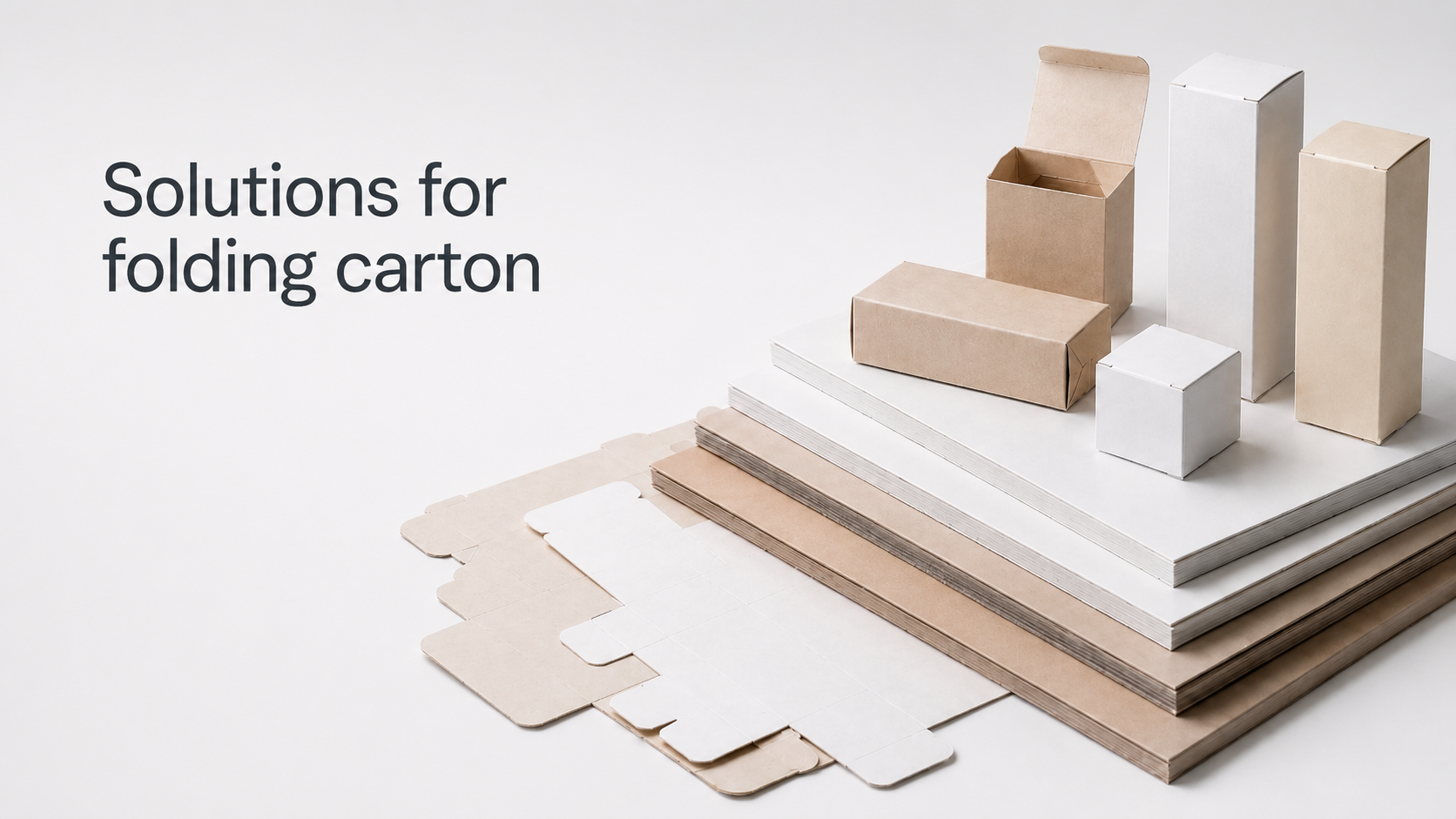
AtB Consultech, official ETERNA agent in Spain, offers automatic die cutter machines for corrugated board, folding carton and industrial packaging. In addition, the ETERNA ECUT range is designed for packaging manufacturers, board converters and printing companies looking for precision, productivity and reliability. Moreover, each model is developed to meet different production needs. For this reason, ETERNA die cutters are a reliable solution for companies working in packaging, cardboard and graphic finishing

Models of

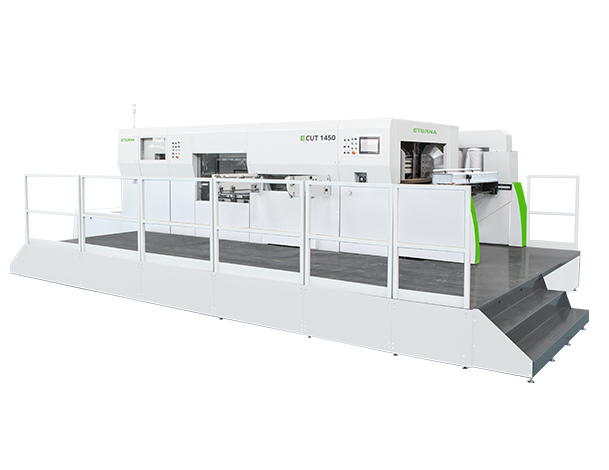
ECUT 1450

ECUT 1450 Automatic Die Cutters

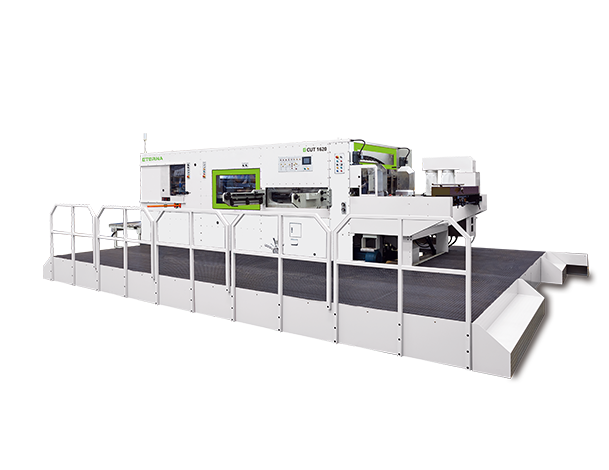
ECUT 1620

ECUT 1620 Automatic Die Cutters

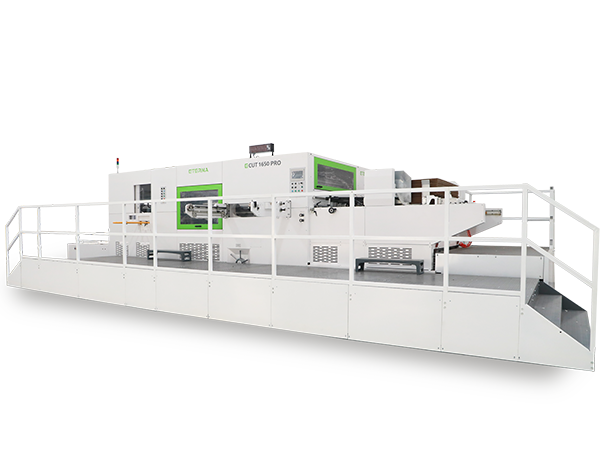
ECUT 1650

ECUT 1650 Automatic Die Cutters

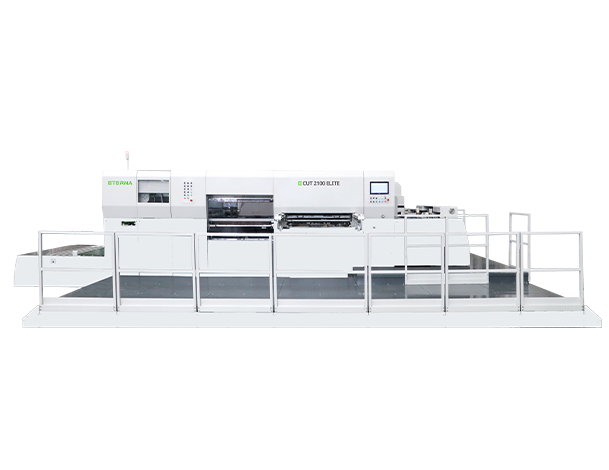
ECUT 2100

ECUT 2100 Automatic Die Cutters

ECUT 1050

ECUT 1050 Automatic Die Cutters

ECUT 1060

ECUT 1060 Automatic Die Cutters

ECUT 1060 ELITE

ECUT 1060 Elite Automatic Die Cutters

q

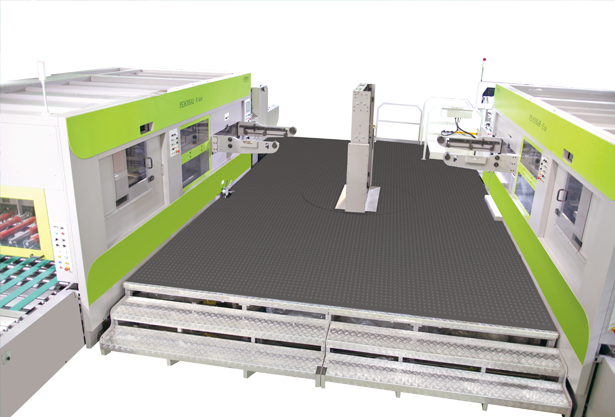
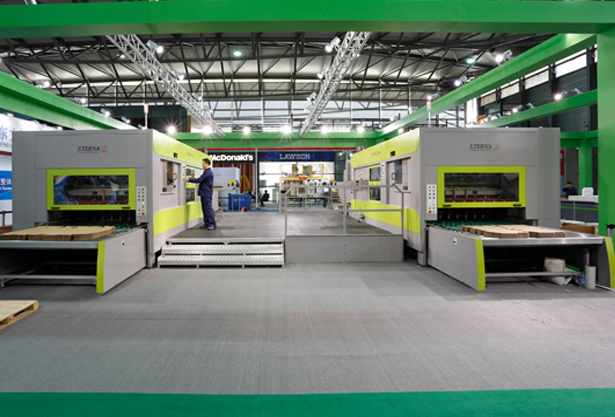
Dual Die-Cutter Working Station “Mirror Mode

What does working in mirror mode mean?

The “Mirror” concept refers to the installation of two die cutters positioned facing each other on their operating sides. Instead of having two independent machines with separate aisles, access areas and platforms, both machines are integrated into a single working station. This arrangement makes it possible to share a common platform, improve operator accessibility and reduce the space required between machines. In certain models, it is also possible to share the side die loader, as well as tools and tooling, making job preparation easier and improving process efficiency. The result is a compact and productive dual die-cutting station, designed for industrial environments where every square metre and every minute of production count

The dual mirror-mode working station for die cutters is a solution designed for companies that need to increase their production capacity without necessarily duplicating space, operating resources or specialised personnel. This system allows two die-cutting machines to be installed in a mirror configuration, positioning the operating sides of both machines face to face and sharing the same working platform. In this way, a compact, efficient and ergonomic station is created, especially designed for packaging manufacturers with high production requirements. The main advantage of this configuration is that a single qualified operator can control two die cutters, instead of requiring one specialised operator for each machine. This helps reduce labour costs, improve work organisation and make better use of the available floor space.

q

Different sections of an automatic die cutter

1

FEEDER

2

DIE CUTTING

3

STRIPPING

4

DELIVERY

Our range of die-cutting machines varies according to the production needs of each type of customer.

  • Automatic die cutters are designed for manufacturers with high production requirements and large-volume jobs. In this type of machine, sheet feeding is carried out fully automatically, allowing high production speeds and a continuous workflow. Automatic die cutters for corrugated board and folding carton are the ideal solution for manufacturers looking to increase production capacity, reduce downtime and improve the final quality of the packaging.

They are especially recommended for companies working with long runs, industrial box production, folding carton packaging, corrugated board, microflute, laminated board or repetitive jobs where stability, speed and precision are key factors.

  • Secondly, semi-automatic die cutters are a highly versatile option for companies that require flexibility in terms of material type, format and grammage. In this case, sheet feeding is carried out manually or assisted by push feeding, making it possible to work with materials that may be more difficult to feed automatically.

This type of die cutter combines manual control with industrial capacity, making it suitable for manufacturers with medium production volumes, varied jobs and frequent format changes.

They are a balanced solution for companies that need higher performance than a manual machine, but do not yet require the full automation level of an automatic die cutter.

  • Finally, manual die cutters, or manual-feed die cutters, are designed for packaging manufacturers that require maximum versatility and work with short runs, special series or highly varied production.

This type of machine makes it possible to die-cut different materials, formats and thicknesses with simpler preparation. They are especially useful for companies carrying out customised jobs, prototypes, samples, small series, special packaging or production where flexibility is more important than speed.

Manual die cutters are a good option for workshops, manufacturers with limited production needs or companies that want to start die-cutting without investing in full automation.

The die-cutting of paper and cardboard is an industrial process used to cut, crease, perforate and shape flat materials using a specific tool known as a die. This process is essential in the production of boxes, folding cartons, displays, packaging, corrugated packaging and special packaging components.

To carry out the process, a die-cutting machine and a die adapted to the final product are required. The die design is manufactured according to the structural layout of the box, folding carton, display or special component to be produced. In this way, each sheet of material is transformed into a die-cut piece, ready for subsequent folding, gluing, assembly or handling.

Die-cutting can be applied to a wide variety of materials, from lightweight papers and cartonboard to heavy solid board, microflute, corrugated board, laminated board, plastics, IML labels and other substrates used in the packaging industry. Each material requires specific adjustments in terms of pressure, registration and waste removal to ensure a clean and precise result.

During the process, the sheet enters the die-cutting machine and is positioned by the registration system. The die then acts on the material, carrying out the required cuts, creases and perforations. Once the piece has been die-cut, it may be necessary to remove the excess material around or inside the design. This stage is known as waste stripping, stripping or blanking, depending on the type of work and the machine configuration.

Waste removal can be carried out in different ways. In automatic die cutters, this process can be integrated into the machine itself through a stripping station, helping to increase productivity and reduce manual intervention. In other cases, waste removal can be performed outside the machine using auxiliary equipment, such as a stripping machine, which is especially useful for separating pieces or removing excess material in certain jobs.

A good die-cutting process depends not only on the machine, but also on the quality of the die, the type of material, the applied pressure, registration accuracy and correct waste evacuation. For this reason, die-cutting is a key stage in achieving well-defined cardboard packaging, clean folds, precise cuts and efficient production.


The die-cutting process can be divided into several stages:

1. Structural packaging design
Before manufacturing the die, the layout of the box, folding carton, display or special component is defined. This design indicates the cutting lines, creasing lines, perforation areas and the sections that will later need to be removed.

2. Die manufacturing
The die is custom-made according to the product design. It includes cutting rules to define the outer shape, creasing rules to create the folding lines and, when required, perforation rules to produce dotted cuts or detachable areas.

3. Material feeding and registration
The sheet of paper, cardboard or packaging material enters the die-cutting machine. The registration system positions each sheet so that the cut matches the print or the structural design correctly.

4. Cutting, creasing and perforation
The machine applies pressure onto the die, which acts on the material and performs the required operations. At this stage, the final geometry of the piece is defined.

5. Waste stripping
After die-cutting, the excess material is removed. This process can be carried out inside the machine itself through a stripping station, or externally using auxiliary tools.

6. Delivery of the die-cut piece
The finished piece is ready for the next production process, such as folding, gluing, assembly, packing or delivery to the final customer.

×